Dear KidsOutAndAbout readers:
If it weren’t for a Polish pastry, I might not exist.
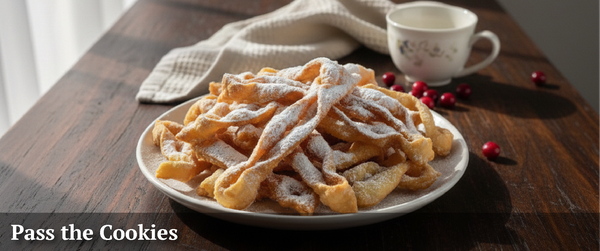
When my great-grandmother Karolina Stelmach was a teenager in a small village in Poland, she was told she’d be entering an arranged marriage. But her heart belonged to Sylvester Nowakowski. So she left... on her own, by boat... and made her way to America. She found work in a restaurant, where she made her
family’s signature dessert: chrusciki. One day, a “distinguished gentleman” insisted on meeting the pastry chef, and he offered her a better-paying job in his own kitchen. She took it, saved enough to bring Sylvester over, and they married. Which means if chrusciki didn’t exist, neither would I.
Stories like this do more than entertain. According to psychologist Robyn Fivush, interviewed on a recent episode of the Hidden Brain podcast, they help kids develop identity,
resilience, and self-worth. The more children know about their family’s past—not just the “big” stories like crossing oceans, but even the day-to-day moments and struggles—the more connected and grounded they become. Fivush and her colleagues at Emory University found that kids who know more family stories have higher self-esteem, greater emotional understanding, and a stronger sense of meaning and purpose. But it’s not just the information that matters...it’s the telling. When we sit down and
share what came before, we help kids feel like they’re part of something bigger, and that they belong.
No AI can replicate that. A chatbot can write a story, sure. But it can’t tell your kids how Grandma’s meatloaf could’ve doubled as a construction material, or how two little girls in the 1950s turned a couple of ice cream cones into a front-porch endurance contest.
So this year, make a point of telling your kids about your family's shared history: about
mistakes, about perseverance, about love, about dessert. Connection doesn’t have to be complicated: Just pull up a chair, pass the cookies, and pass down the stories.
—Debra Ross, publisher